Commercial Space Firms Set Sights on Lunar South Pole Resource Trials
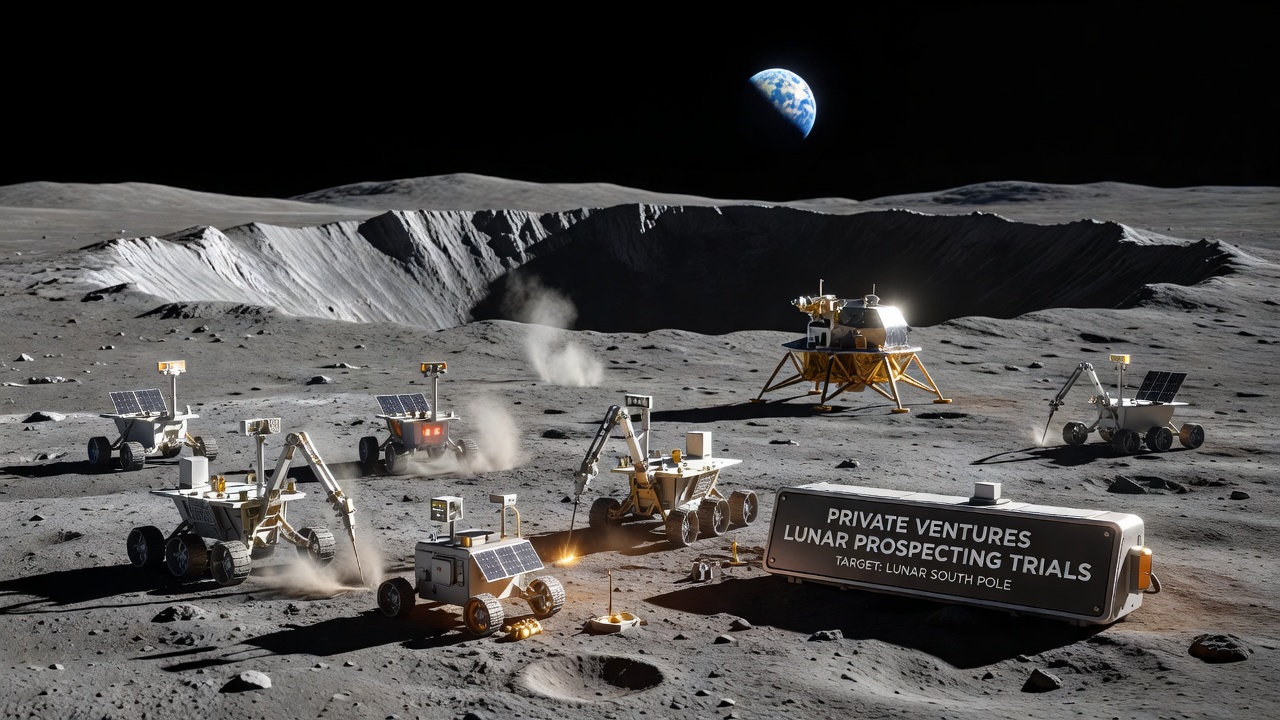
Private companies have shifted focus toward the lunar south pole as multiple missions prepare equipment and schedules for initial resource prospecting operations. Data from orbital surveys show elevated hydrogen concentrations in permanently shadowed regions, which researchers link to water ice deposits that could support future propellant production. Several firms have secured launch contracts and technology demonstrations timed for the mid-2020s, with field trials expected to begin in October 2026.
Geographic Advantages Drive Site Selection
The lunar south pole offers near-constant sunlight on elevated rims alongside adjacent cold traps that maintain temperatures low enough to preserve volatiles. Mission planners note that these combined conditions reduce power system demands while providing access to materials that might be processed into oxygen and hydrogen. According to
NASA orbital measurements, certain craters retain water ice signatures that private operators now intend to verify on the surface.
Private Operators Outline Prospecting Approaches
Multiple commercial entities coordinate separate lander and rover designs aimed at drilling, sampling, and analyzing regolith layers. One team integrates neutron spectrometers with mass spectrometers to map subsurface ice distribution across short traverse distances. Another group tests thermal extraction methods that heat soil samples and capture released gases for quantity assessment. These parallel efforts allow comparison of different prospecting techniques before larger scale extraction hardware is developed.
Timeline and October 2026 Milestones
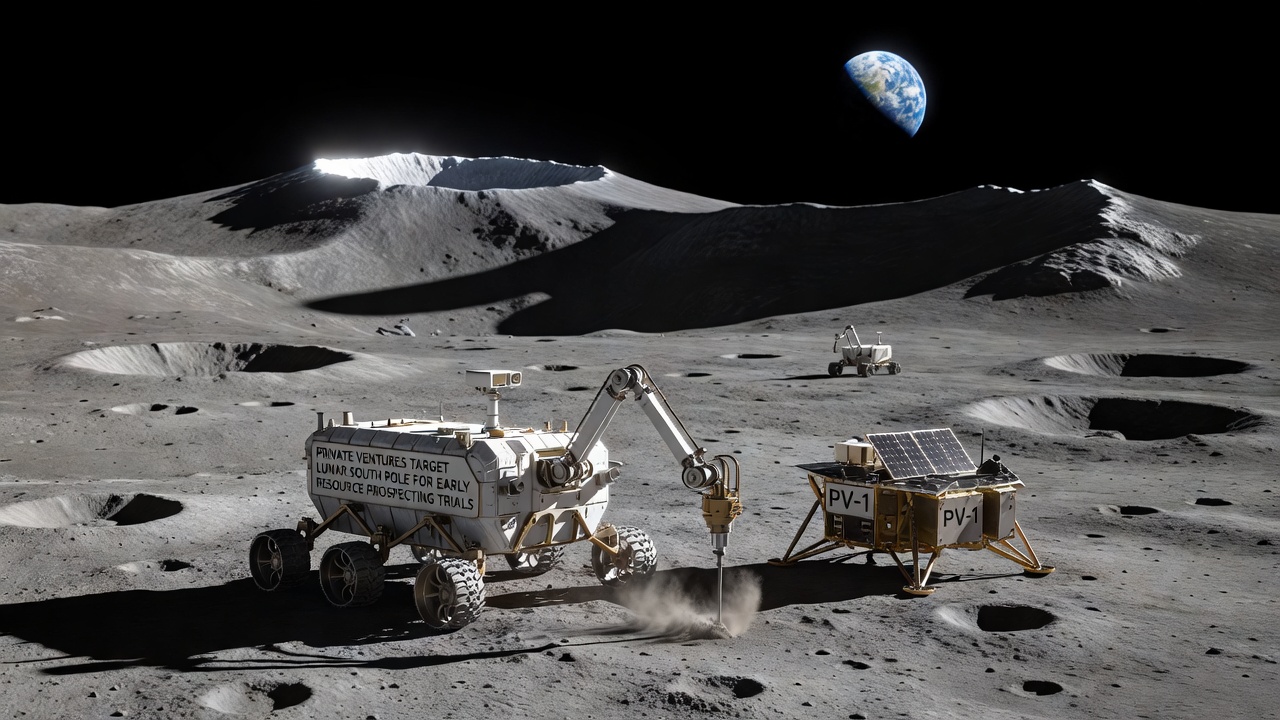
Launch manifests list several south pole targeted payloads arriving during 2026, with surface operations commencing in October. Ground controllers plan to conduct initial drill tests within the first lunar day after landing, followed by repeated sampling cycles during subsequent daylight periods. Observers tracking commercial launch manifests report that at least three distinct vehicles will attempt simultaneous or staggered landings within the same season, creating opportunities for shared communication relays and data cross-checks.
Technical and Regulatory Considerations
Engineers address challenges including extreme temperature gradients, abrasive regolith, and limited real-time communication windows. Companies have incorporated autonomous navigation software that allows rovers to maintain progress during Earth occultation periods. Regulatory filings submitted to national space agencies outline compliance with planetary protection guidelines while establishing priority zones for non-overlapping operations. The European Space Agency maintains an open database of proposed landing ellipses that helps coordinate traffic management among commercial participants.
Resource Data Collection Methods
Prospecting payloads carry combinations of ground-penetrating radar, infrared spectrometers, and sample return capsules sized for small ice cores. Researchers compare returned material against orbital datasets to refine models of ice distribution and purity levels. One study published through university partnerships examined how solar wind implantation and comet delivery might contribute to the observed hydrogen concentrations, providing context for the quantities private teams expect to encounter.
Supporting Infrastructure Developments
Ground stations in Australia and Canada have expanded tracking capacity to support the anticipated increase in lunar traffic. Communication protocols tested during earlier missions now incorporate higher data rates needed for transmitting detailed spectrometer readings and high-resolution imagery. Supply chain agreements between propulsion providers and payload integrators ensure that fuel and component deliveries align with the October 2026 operational window.
Conclusion
Private ventures continue to refine hardware and operational plans that target measurable resource quantities at the lunar south pole. The sequence of landings scheduled for October 2026 will generate the first direct datasets from surface instruments, feeding into subsequent mission designs. Coordination among companies, agencies, and tracking networks establishes the framework for sustained prospecting activities beyond the initial trial phase.