Erik Baumann · 16 October 2026
Lunar Lava Tube Networks Emerge as Key Protection for Moon-Based Equipment Against Space Weather
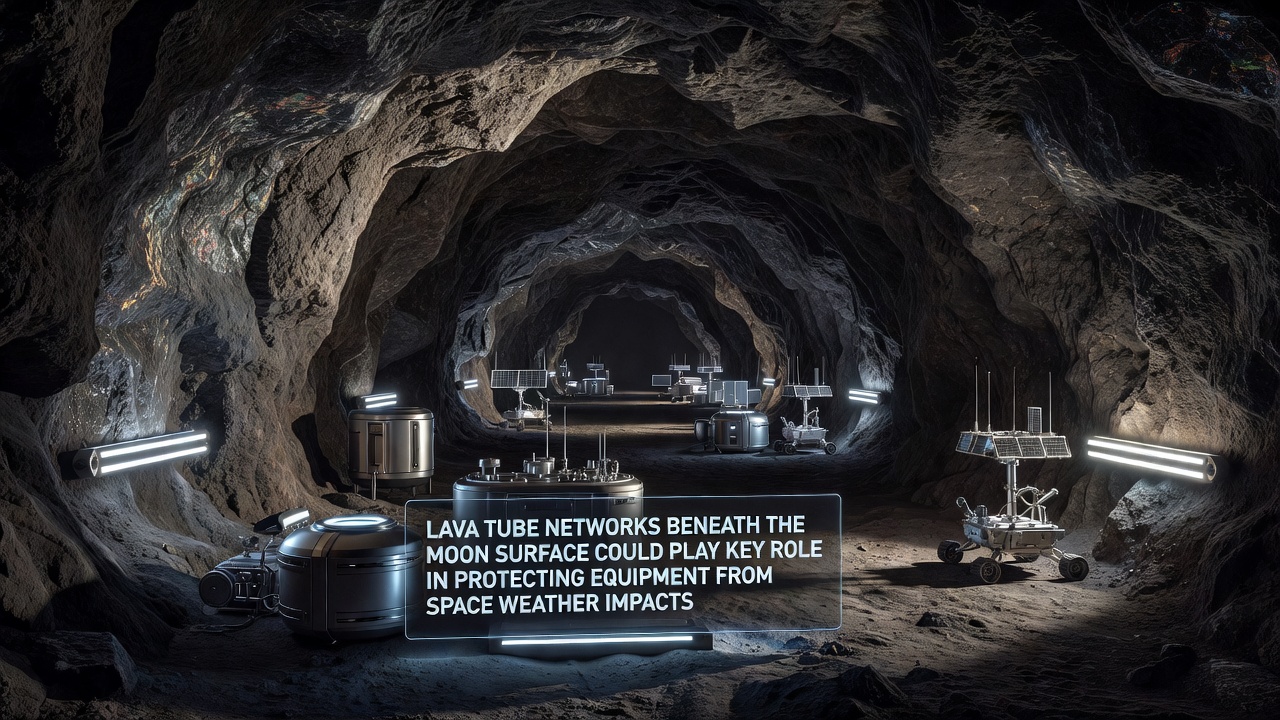
Scientists have identified extensive networks of lava tubes beneath the lunar surface that could serve as natural shelters for sensitive equipment, shielding it from the intense radiation and particle bombardment associated with solar activity and cosmic rays. Data from orbital surveys and seismic studies indicate these formations extend for kilometers in several regions, creating enclosed environments where temperatures remain more stable and radiation levels drop significantly compared to the exposed surface. Researchers at institutions across multiple continents continue to map these structures using radar and imaging technology, revealing details that connect ancient volcanic processes to modern protection strategies for lunar infrastructure.
Formation and Structure of Lunar Lava Tubes
Lava tubes form when molten rock flows beneath a cooled crust during volcanic eruptions, leaving behind hollow channels once the lava drains away. On the Moon, these features developed billions of years ago during periods of intense volcanic activity, and many have remained intact because the lack of atmosphere and tectonic movement preserved them over time. Observations from spacecraft such as those operated by NASA and the European Space Agency show tube entrances and collapsed sections called skylights that allow remote sensing of their interiors. Studies published in planetary science journals reveal tubes can reach widths of hundreds of meters and lengths exceeding several kilometers, with some containing multiple levels connected by narrower passages.
Mapping efforts rely on gravity measurements and ground-penetrating radar to detect subsurface voids without direct contact. Teams analyzing data from the Lunar Reconnaissance Orbiter have identified clusters in the Marius Hills and other mare regions where volcanic plains dominate the landscape. These surveys provide coordinates and dimensions that engineers use when evaluating sites for potential equipment placement or habitat construction.
Space Weather Challenges on the Lunar Surface
Without an atmosphere or global magnetic field, the Moon experiences direct exposure to solar energetic particles during flares and coronal mass ejections, along with galactic cosmic rays that penetrate deep into surface materials. Equipment such as solar panels, communication arrays, and scientific instruments faces degradation from these particles, which can cause charge buildup, material erosion, and electronic failures over extended periods. Data collected by instruments on previous missions document spikes in radiation dose rates during solar events that exceed levels considered safe for prolonged human or machine operation.
Models developed by space weather researchers at universities in the United States, Europe, and Australia predict that unshielded systems could experience accelerated aging, with some components failing within months during periods of high solar activity. These projections draw from continuous monitoring by satellites positioned at various points in the solar system, offering a baseline for comparing surface conditions to those inside subsurface voids.
Protective Benefits Offered by Lava Tube Networks
Thick layers of lunar regolith above the tubes absorb and deflect incoming radiation, reducing dose rates to fractions of surface values according to simulations run with actual tube dimensions. Equipment placed inside these spaces would encounter fewer high-energy particles, lowering the risk of single-event upsets in electronics and extending operational lifetimes. Temperature fluctuations also moderate inside the tubes, where thermal inertia from surrounding rock maintains conditions closer to constant values rather than the extreme swings between lunar day and night.
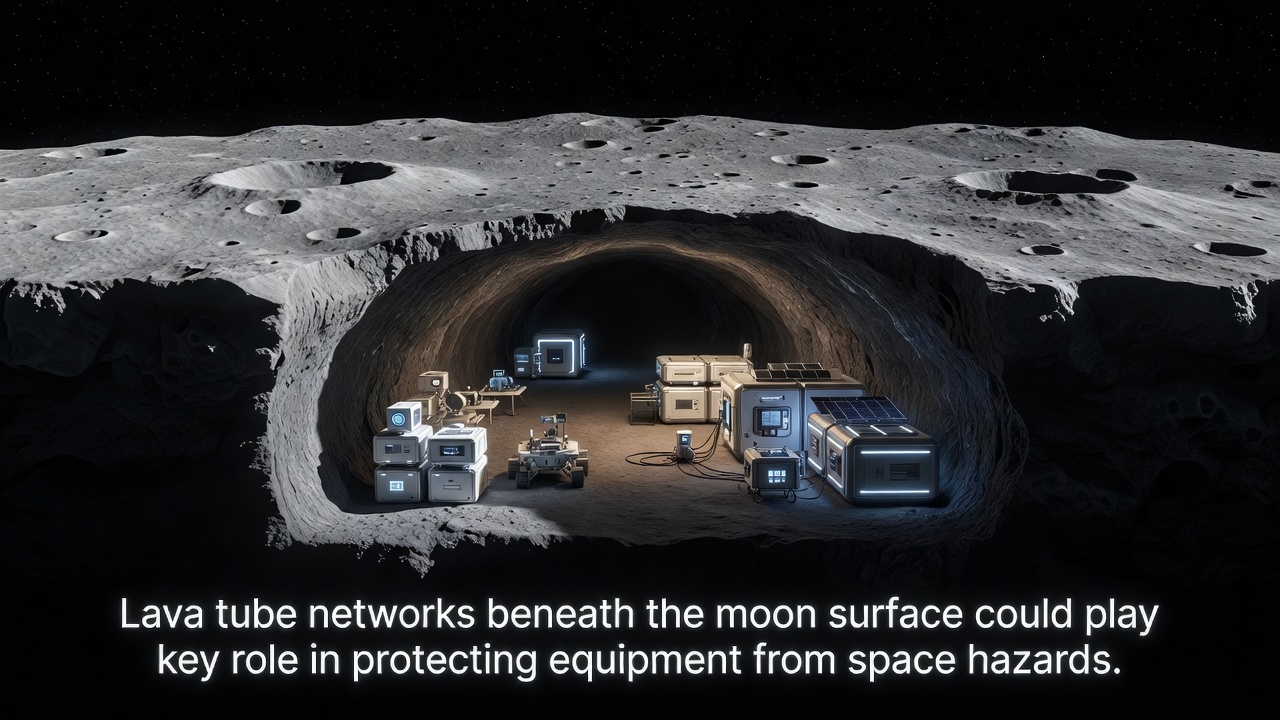
Researchers note that the same rock overburden that blocks radiation also provides defense against micrometeoroid impacts, as incoming debris would encounter multiple layers before reaching sheltered areas. Analysis of meteoroid flux data combined with tube roof thickness estimates suggests impact probabilities decrease substantially in these locations. Ongoing work by international teams examines how ventilation and access routes could integrate with tube networks to support long-term equipment arrays without compromising the protective envelope.
Current Research and Upcoming Activities
Multiple agencies coordinate efforts to refine tube detection methods and test concepts for robotic entry. In October 2026, additional data releases from ongoing orbital missions are expected to update existing maps with higher-resolution imagery and refined gravity models, allowing more precise identification of stable tube segments suitable for equipment deployment. Academic groups in Canada and Japan contribute specialized instruments that measure subsurface electrical properties, adding layers of information to existing datasets.
Ground-based experiments simulate lunar conditions to verify how various materials and electronics perform under reduced radiation environments similar to those inside tubes. Results from these tests feed into design guidelines shared among research institutions and space agencies, ensuring consistency across different projects. NASA lunar reconnaissance data and parallel studies from ESA programs supply the foundational measurements used in these simulations.
Integration with Broader Lunar Exploration Plans
Plans for scientific stations and resource extraction facilities often reference subsurface options when discussing long-duration operations, because surface-only setups require heavier shielding that increases launch mass and cost. Lava tube networks could reduce these requirements by providing pre-existing cover, allowing lighter equipment designs focused on functionality rather than protection. Coordination between international partners includes shared databases of tube locations and characteristics to avoid duplication of survey work.
Engineers evaluate access methods such as ramps through skylights or drilling small entry points while preserving the surrounding rock integrity. Case examples from terrestrial lava tube research in volcanic regions on Earth inform these approaches, although lunar gravity and material properties demand adjustments to standard techniques.
Conclusion
Lunar lava tube networks represent documented geological features whose dimensions and locations continue to be refined through orbital and ground-based measurements. Their capacity to attenuate space weather effects stems from measurable rock thickness and structural stability established by decades of remote sensing. As mapping improves and October 2026 data releases add detail, planners gain clearer options for positioning equipment in environments where radiation and thermal stresses remain lower than on the open surface. International collaboration supplies the data streams and modeling tools that connect these natural formations to practical protection strategies for future lunar operations.