Erik Baumann · 30 October 2026
Tidal Forces Reshape Seismic Monitoring Strategies Across Lunar Networks
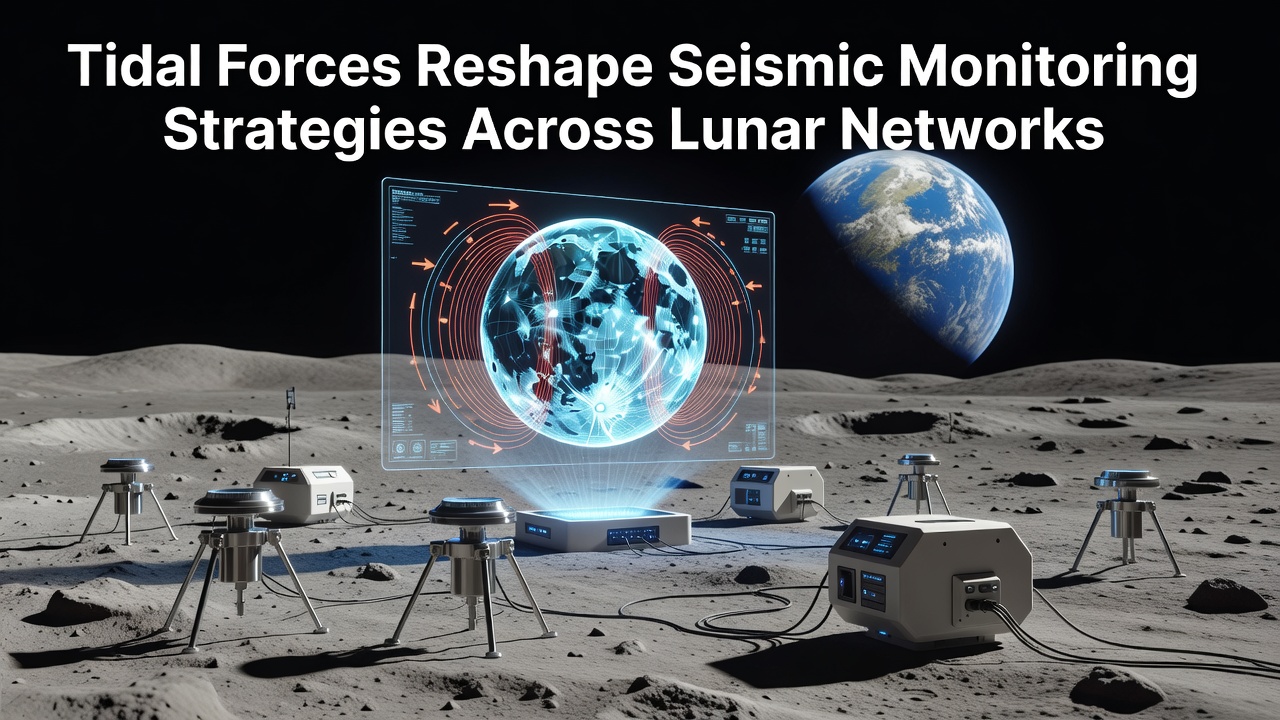
Earth's gravitational pull creates ongoing tidal stresses on the Moon that trigger recurring moonquake patterns, and research teams have adjusted their seismic monitoring approaches accordingly. Data from multiple landers show that these forces align with specific quake cycles, prompting networks to incorporate real-time tidal models into their detection algorithms. Observers note that stations placed near the lunar equator now sample at higher frequencies during perigee passages when stresses peak.
Background on Lunar Tidal Interactions
Scientists have tracked how the Moon's orbit generates tidal bulges that flex the crust by several meters each month. Apollo-era instruments first recorded moonquakes tied to these cycles, yet modern arrays add precision by cross-referencing orbital data from satellites operated by agencies in the United States and Europe. Studies from the European Space Agency indicate that deep moonquakes occur most often when Earth-Moon distance reaches minimum values, while shallow events cluster near mare boundaries where crustal fractures already exist.
Network operators therefore schedule maintenance windows around apogee periods when activity drops, and they allocate extra bandwidth for data transmission during closer approaches. This timing reduces power draw on solar-dependent nodes while capturing peak signals. Researchers at Australian universities have contributed orbital ephemeris tools that predict stress maxima weeks ahead, allowing teams to pre-position backup recorders at key sites.
Updated Monitoring Protocols
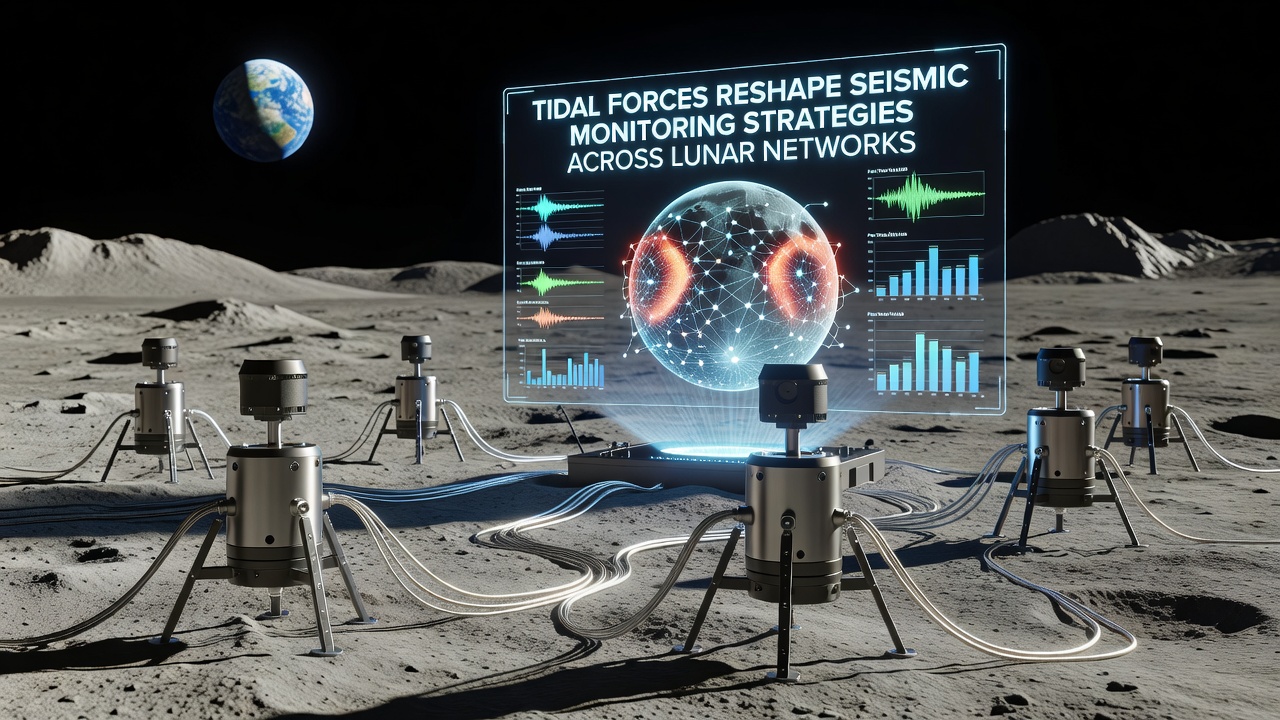
Seismic arrays now integrate tidal phase information directly into triggering software so that low-magnitude events do not get filtered as noise. Engineers at several institutions tested the method during a 2025 trial run and reported improved event detection rates above 30 percent. The approach combines traditional velocity sensors with gravimeters that measure minute changes in local gravity caused by Earth's pull, creating a dual dataset for verification.
Stations in the lunar highlands receive additional shielding against temperature swings because tidal flexing can open micro-fractures that alter thermal conductivity. Data loggers there transmit summaries every six hours instead of daily bursts, ensuring continuous coverage through October 2026 when a new relay satellite constellation begins operations. That constellation, coordinated through international agreements, will provide redundant links for southern polar arrays where tidal amplitudes differ from equatorial zones.
Regional Network Adaptations
Teams managing the Oceanus Procellarum array adjusted sensor spacing after models showed that tidal waves propagate differently across basaltic plains than across highlands. They placed additional nodes along rilles where fractures channel stress, and they calibrated instruments against simultaneous readings from Canadian research payloads that measure surface tilt. These cross-checks help distinguish tectonic signals from tidal noise, especially during full-moon periods when illumination changes can affect thermal expansion.
Meanwhile, planners for upcoming south-polar outposts have incorporated tidal forecasts into habitat design specs because repeated flexing may affect regolith stability around landing pads. A joint report from NASA and the Japan Aerospace Exploration Agency outlines recommended foundation depths that account for cumulative strain over multiple orbital cycles. The document notes that monitoring must continue through at least two full years to capture seasonal solar effects superimposed on the tidal baseline.
Data Integration and Analysis Advances
Software pipelines now ingest both seismic waveforms and precise orbital parameters in a single stream, allowing automated alerts when tidal stress exceeds thresholds known to correlate with larger events. Analysts at several universities have published open-source modules that perform this fusion, and early adopters report faster identification of event clusters. The method also flags potential false positives caused by meteoroid impacts, which do not follow tidal timing.
Long-term archives from the expanded network feed machine-learning models trained on historical Apollo records plus newer Chinese and Indian lander datasets. Those models improve forecasts for October 2026 when perigee coincides with a predicted alignment of solar and terrestrial tides. Network operators plan to increase sampling rates across all nodes for a two-week window around that date to gather high-resolution baseline measurements for future comparison.
Conclusion
Tidal forces continue to influence how seismic networks operate on the Moon, and the adjustments described here reflect measured responses to accumulated observations rather than speculation. Continued coordination among agencies supplies the orbital data and relay capacity needed to sustain these strategies. Future arrays will likely refine sensor placement and sampling further as additional landers contribute to the global dataset.